

Accelerating Interdisciplinary Learning Through Collaborative Technology
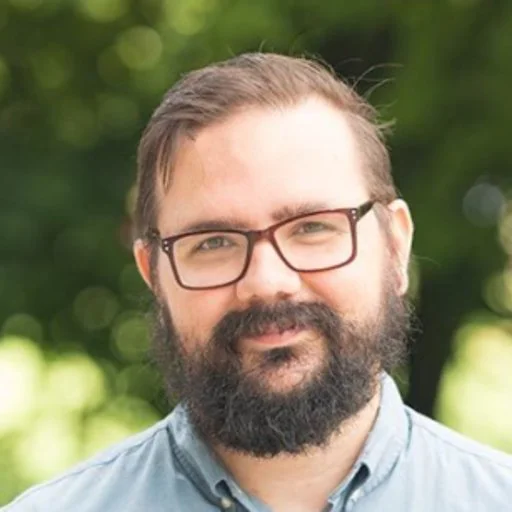
Photo of Josh Mullenite
Josh Mullenite, PhD
Sustainability
Project Overview
This project looked at the way technology could be used as a tool to more quickly and effectively introduce students to unfamiliar concepts in an interdisciplinary degree program. Students in the Masters of Sustainability and Master of Sustainability and Master of Business Administration program would be asked to use different types of technology to work collaboratively on projects in an effort to enhance group-based learning. Because students in these programs come from a variety of educational and professional backgrounds, the project sought to understand if students could use technology as a mediator where they could asynchronously share information based on their own background knowledge and experiences.
Planning Process
The project was originally set to take place in SUS606 Urban Planning and Political Ecology. This course was not a part of the standard curriculum but rather a substitute necessary as part of the transition and clean up of courses in the Master of Sustainability and Master of Business Administration degree programs. Because the practical focus of the course (urban planning) was outside of the scope of interest and background knowledge for the students taking it, I planned to use different tools to introduce topics and to help students build the understanding not only to be successful in the course but to apply the key concepts outside of it. To do this, I used a broken out version of the course objectives and the Taxonomy of Significant Learning to map different outcomes and goals to specific tools.
I planned to test and compare different technologies and teaching tools with the explicit goal of increasing the speed at which students learn new concepts in an unfamiliar field such as urban planning. I planned to build foundational knowledge, using Perusall and guided classroom discussions to help students quickly understand and retain key concepts in urban planning and political ecology, learn the historical origins of the planning profession, and explain the challenges of planning in a capitalist and democratic society.
I then planned to emphasize application by asking students to use tools such as Survey123 and Qualtrics to derive practical conclusions from public input, including surveys and focus groups. I planned to use platforms like Mindomo and Planner to help students practice appropriately sequencing the steps of an urban planning project, and planned to test visualization and communication tools such as ArcGIS, PowerPoint, Sway, and Word or Publisher to assess how effectively students can learn to present complex information clearly to a general audience.
For integration, I planned to require a final written product in which students synthesized data, made informed professional decisions, and explicitly described how geography and culture shape planning conditions and possibilities. This would have allowed me to evaluate how well students are able to connect concepts, skills, and context within a relatively short learning timeframe.
Finally, I planned to intentionally address the human dimension of learning. I would have used classroom discussions, Perusall activities, and pre- and post-assessments to help students identify their own biases, assess their leadership abilities, and recognize areas for improvement. I planned to also design activities that encourage empathy, fairness, and sensitivity toward people from diverse backgrounds, and I planned to evaluate students’ ability to work effectively as members of a team through both reflection and their final project. Across all learning domains, I planned to use student performance and reflection to determine which technologies and teaching strategies most effectively accelerate learning while maintaining depth, critical thinking, and professional awareness.
In all of my teaching, I use key universal design principles as a standard for ensuring students are able to be successful in my courses with without disclosing any particular disabilities. While this has been a key part of my teaching philosophy for several years, in this course I also considered key questions from DEI design to better consider how students personal experience connect to planning theory and history, how they understand and apply equity frameworks in their course projects, the background of various authors and their critiques of what has historically been a white profession, and how they can take all of this from the course design and apply it to the work they were doing in communities.
Implementation
Very quickly I found it impractical to try and use so many different technologies at once and instead decided to use my Plan B, which was to focus on one but to instead use that one technology across multiple courses. I used Perusall for this and spent a significant amount of time working with students on understanding what made Perusall unique, how to use it, and how its automatic features would be used for assessment. All the course readings were uploaded to Perusall for Urban Planning and Political Ecology as well as my other graduate seminar Pursuing Sustainability through Governance and our Essential Readings Course. Between these three there were 20 total graduate students who came from a variety of backgrounds including sustainability, nursing, environmental science, and business among others.
Assessment
I assessed the efficacy of using Perusall through a survey of 20 graduate students who had at least one course where it was the primary place to access readings. Using a Qualtrics survey I asked students the extent to which they agree with the following:
Overall Impact
Perusall’s interactive features (comments, replies, upvotes) helped me understand complex topics more quickly.
Using Perusall improved my overall comprehension of the assigned readings.
Compared to traditional reading assignments, Perusall made the learning process more efficient.
Collaboration and Peer Learning
Reading classmates’ comments helped clarify difficult concepts.
The collaborative discussions reduced the amount of time I needed to understand challenging material.
I benefited from seeing how peers interpreted the same passages.
I felt comfortable asking questions or raising confusion within Perusall.
Engagement and Motivation
The ability to annotate directly in the text kept me more engaged than traditional reading assignments.
The ability to see other students' comments and highlights kept me engaged during more complex passages.
Using Perusall encouraged me to ask more questions about confusing or complex concepts.
The social aspect of Perusall made the readings more interesting.
Students were also offered the opportunity to provide open-ended responses to the following questions:
How does your learning experience with Perusall compare to traditional reading and discussion methods?
What changes would make Perusall more effective for your learning?
While the number of students surveyed is fairly low (n=20), students viewed using Perusall positively, especially in terms of engagement, social learning, and more easily comprehending difficult materials. Students appreciated the ability to interact with each other in the text and, in general, felt more engaged during difficult readings.
Negative comments focused less on the idea of collaborative learning through reading platforms and more on the function of Perusall itself. Despite lax completion “rules” students found the grading of these rules as opaque and inflexible, focusing more on meeting requirements than on the reading. They likewise noted issues with highlighting or interacting with the text and other comments on any non-computer devices (e.g. smartphones or tablets).
The two grouping or dependent variables were the number of exposures to Perusall (min: 1, max: 3) and whether students had a prior background in sustainability or related fields. As students used Perusall more they had more nuanced critiques of its usability but remained generally positive about the ways that it improved their comprehension. Interestingly, students without a background in sustainability or a related field were more neutral (though still not negative) on whether the platform improved their comprehension.
Reflections and Next Steps
There was an obvious limitation in Perusall in terms of how the software functioned which created some accessibility challenges. Regardless, the outcomes were promising in showing that collaborative learning software could potentially increase student engagement and information acquisition. Starting over I think I would have, from the beginning, started smaller and focused on one technology at a time. I will probably try this again next semester with either another single technology or a couple of connected ones and iteratively continue this process until I’m able to meet my original project goals.